

There’s a moment that happens after loss—one most people don’t talk about because it feels too small to name.
It isn’t the immediate shock. It isn’t the deep grief. It isn’t even the stretch of numbness that follows.
It’s the moment when you pick something up that belonged to the person you lost, and you realize you’re holding more than an object.
For me, it was finding an old pack of my brother’s cigarettes.
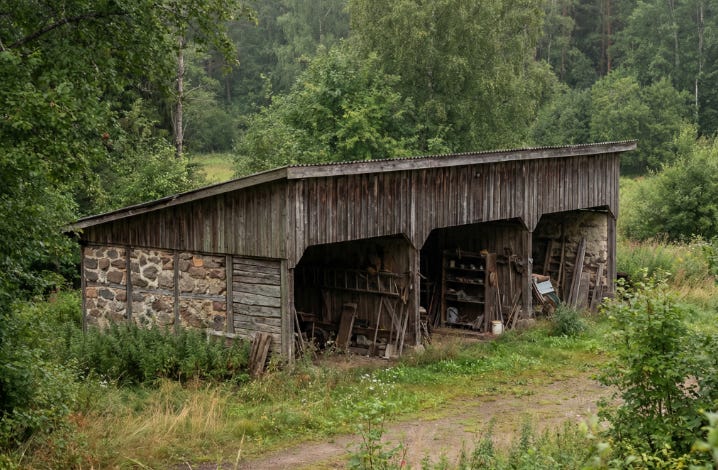
He’d kept them hidden from his kids—tucked up high on an old shelf under a shed roof. The kind of secret that wasn’t really a secret, just something he kept to himself.
I found them after he died. I still walk by that spot from time to time. There’s an old butt up there, one he must have extinguished. I can still see it.
I’ve never moved it. It felt more like stepping into a room where the air still held someone’s breath.
I think everyone has an object like that—something small that becomes a doorway. Not to the past, but to the unfinished conversation between who we were and who we’re becoming.
I’ve been thinking about that lately as I work on Becoming James. The novel is historical fiction, but the grief underneath it isn’t.
And the deeper I get into revision, the more I’m confronted by the quiet truth that the stories we write don’t stay on the page. They follow us. They shape the way we move in the world.
They become the objects we carry forward.
Some people carry faith. Some carry questions they’ve never said out loud. Some carry regret, or gratitude, or the quiet wish that they’d been braver in a moment that mattered. Some carry the stories their parents told. Some carry the ones their parents refused to tell.
Most of us carry all of it at once.
And maybe that’s part of the work—learning to sort through the weight, to keep what keeps us human, and to set down what no longer belongs in our hands.
A storyteller I admire once said that grief is the price we pay for loving people at all. I think that’s true. But I’ve also learned something else:
Grief is also an inheritance. A harsh one. But an honest one.
It wants something from us—it asks what we’ll be like after.
As I write this, two photos are pinned to the wall above my desk. One of my brother and one of my father. They don’t mean what they used to. They’ve changed, the way objects do when you’ve held them long enough to see past what they show.
I look at them when the writing gets hard. Not for comfort, exactly. Just to remember that the hardest stories aren’t the ones we write—they’re the ones we live our way through before we’re ready to tell them.
I don’t know what you’re carrying these days. But if you’re here, reading this, I hope you know you don’t have to carry it alone.